
Why Tactical Digital Marketing Stops Working at Scale
Mar 4, 2026
5 mins


%201.svg)

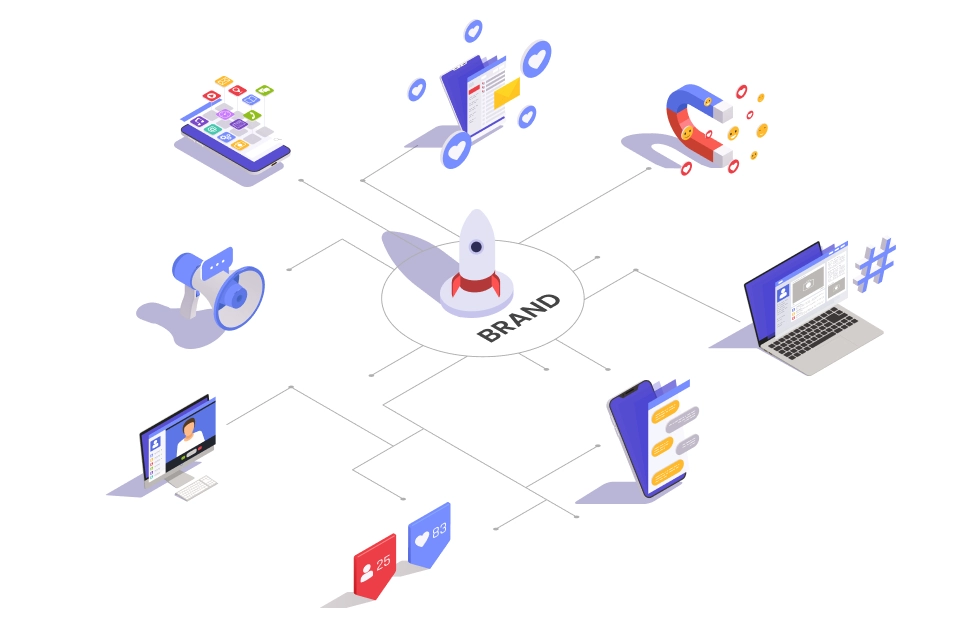
Across industries—logistics, manufacturing, SaaS, and enterprise services—
a quiet divide is becoming visible.
Some organizations experience steady, compounding growth.
Others rely on:
Both groups may appear similar externally.
But structurally, they operate very differently.
The difference is rarely budget or ambition.
More often, it is whether digital marketing is treated as isolated activity
or as connected digital infrastructure built around the buyer journey.
Because sustainable growth is rarely the result of campaigns.
It is the result of systems.
Infrastructure-led digital marketing is not about doing more tactics.
It is about designing connected systems that mirror how modern buyers think, evaluate, and decide.
Instead of fragmented actions, businesses intentionally build:
When these layers operate in sequence,
growth stops behaving randomly.
It begins to compound.
.webp)
No growth system begins without visibility.
Discovery infrastructure ensures that a company appears when buyers search, compare, and evaluate.
This includes:
Without discovery, even the most persuasive messaging remains unseen.
But discovery alone is not enough.
Visibility creates attention.
It does not create trust.
Modern buyers are skeptical.
In B2B environments—especially logistics, manufacturing, and enterprise services—
risk sensitivity is high.
Trust infrastructure includes:
Trust is what transforms interest into consideration.
Without it, traffic may arrive.
But decisions stall.
This is where many companies misunderstand growth.
They attempt to optimize conversion before trust exists.
But trust precedes commitment.
Always.
Between trust and conversion lies a crucial layer often ignored:
consideration of infrastructure.
This is where potential buyers:
Consideration infrastructure may include:
It ensures that when buyers are ready to decide,
they do not hesitate.
Instead of pushing for immediate conversion,
infrastructure-led strategy supports confidence building first.
.webp)
Conversion infrastructure is essential—but it must appear at the right stage.
When visibility, trust, and consideration are aligned,
conversion becomes frictionless.
Conversion infrastructure includes:
At this stage, conversion is no longer persuasion.
It is facilitation.
The buyer is ready.
The system simply removes obstacles.
Most marketing efforts stop at conversion.
Infrastructure-led digital strategy continues.
Insight infrastructure measures:
Optimization infrastructure then:
Over time, this creates a feedback loop.
Each improvement strengthens discovery.
Stronger discovery feeds better trust.
Better trust improves consideration.
Clear consideration enhances conversion.
Insights refine the entire system.
This is how digital growth compounds.
.webp)
Despite the clarity of this model,
few companies implement it successfully.
Common barriers include:
Infrastructure compounds slowly at first.
Impatience disrupts system maturity.
Different vendors handle SEO, design, ads, and content without unified strategy.
Posting replaces positioning.
Campaigns replace architecture.
When digital is seen as a marketing responsibility rather than core infrastructure,
long-term investment rarely follows.
The challenge is not capability.
It is structural alignment.
When organizations adopt a buyer-aligned infrastructure model,
growth behaves differently.
Search presence strengthens month by month.
Buyers arrive pre-informed and pre-qualified.
Confidence replaces hesitation.
Because intent and clarity are aligned.
Optimization compounds rather than resets each quarter.
Growth becomes less reactive.
More predictable.
More defensible.
Designing buyer-aligned digital infrastructure requires coordination across:
This complexity is why infrastructure-led transformation
rarely succeeds through isolated fixes.
At Parashift Technologies, digital strategy begins with architecture, not activity.
We work with growing organizations—particularly in logistics and B2B sectors—
to design interconnected digital infrastructure that mirrors real buyer journeys.
Not more campaigns.
Not louder visibility.
But structured systems that compound authority, trust, and measurable growth.
Because long-term success in 2026 will not belong to those who market more.
It will belong to those who build better infrastructure.
.webp)
Marketing tactics can create spikes.
Infrastructure creates momentum.
The companies that lead their industries over the next decade
will not be the ones experimenting constantly.
They will be the ones investing structurally.
Discovery.
Trust.
Consideration.
Conversion.
Insight.
Optimization.
When these layers connect,
growth stops feeling unpredictable.
It becomes engineered.
And engineered growth is the foundation of durable business leadership.