Why Tactical Digital Marketing Stops Working at Scale
Mar 4, 2026
5 mins


%201.svg)


For years, digital growth advice revolved around one metric: visibility.
Get more traffic.
Rank for more keywords.
Post more content.
Increase impressions.
But the digital environment of 2026 has shifted fundamentally.
Visibility is no longer scarce.
Attention is.
Trust is.
Authority is.
And that distinction is reshaping how modern businesses grow.
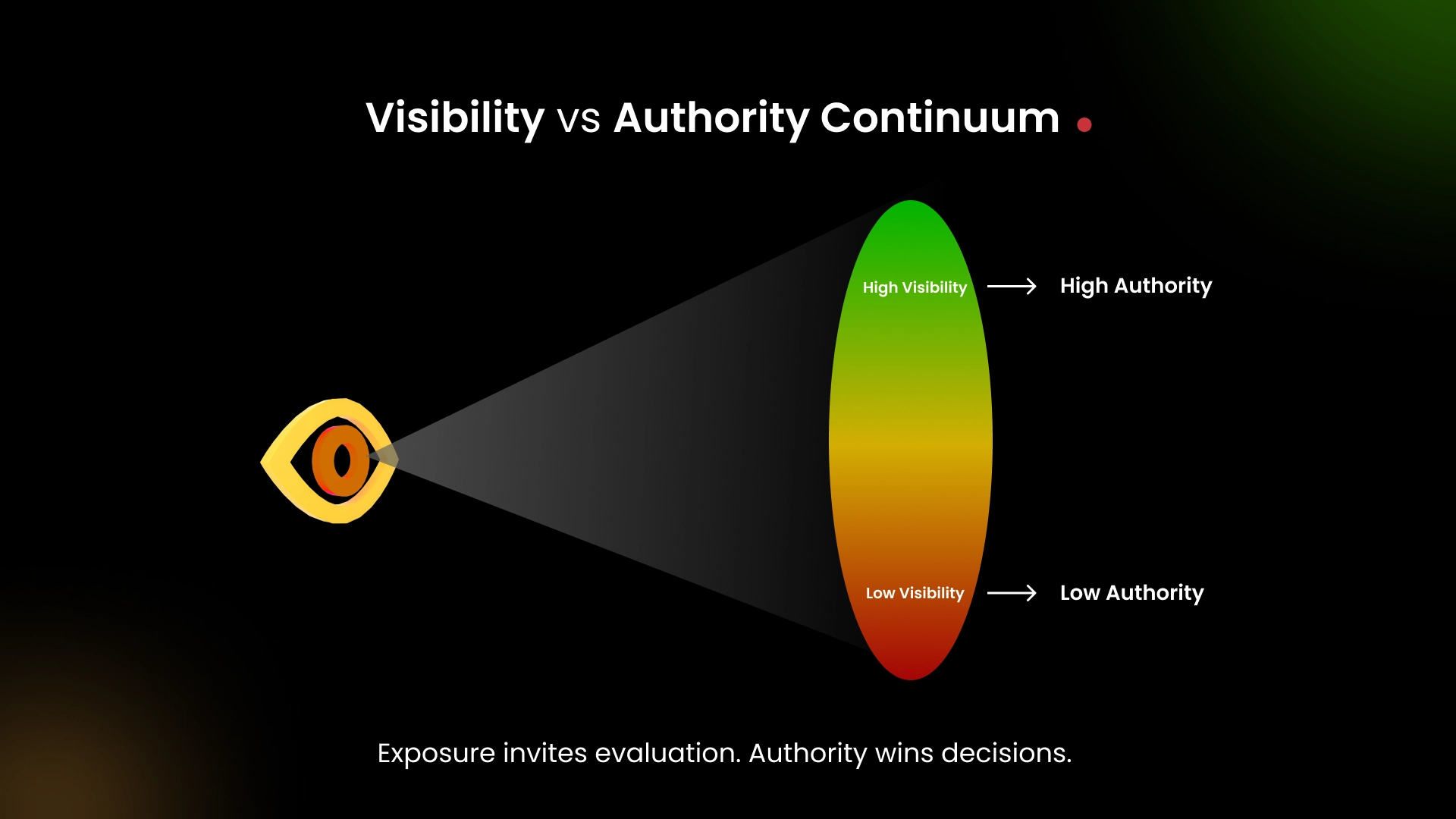
Today, a company can be highly visible and still struggle with conversion, credibility, and pipeline quality. The problem is no longer exposure — it is perceived authority.
Visibility gets you seen.
Authority gets you chosen.
And confusing the two has quietly become one of the most expensive growth mistakes in modern digital strategy.
The internet has matured.
Markets across Europe and other developed economies are digitally saturated. Buyers have options. They compare vendors. They research independently. They verify claims before conversations begin.
Appearing in search results no longer differentiates you.
It only qualifies you for evaluation.
In 2026, visibility is table stakes.
The real differentiator is depth.
When buyers land on your website, read your content, or encounter your brand in an AI-generated summary, they are asking:
If your digital presence answers those questions clearly, visibility becomes leverage.
If it doesn’t, visibility becomes noise.
Trust online is no longer emotional branding alone.
It is structural credibility.
It is built through a network of reinforcing signals:
Trust is rarely created by one powerful asset.
It emerges from signal density.
When multiple authority signals align across channels, the buyer subconsciously concludes:
“This company is established. This company understands.”
When those signals are weak or inconsistent, doubt increases — even if traffic is high.
Authority is cumulative.
And cumulative trust drives conversion efficiency.
Traffic is a volume metric.
Pipeline is a confidence metric.
The two are related — but not equivalent.
You can have:
And still struggle with:
Why?
Because visitors do not convert when authority is thin.
They consume information.
They compare alternatives.
They hesitate.
In sectors such as logistics, SaaS, manufacturing, engineering, and consulting — high-value decisions require high-confidence signals.
Traffic creates opportunity.
Authority converts opportunity into action.

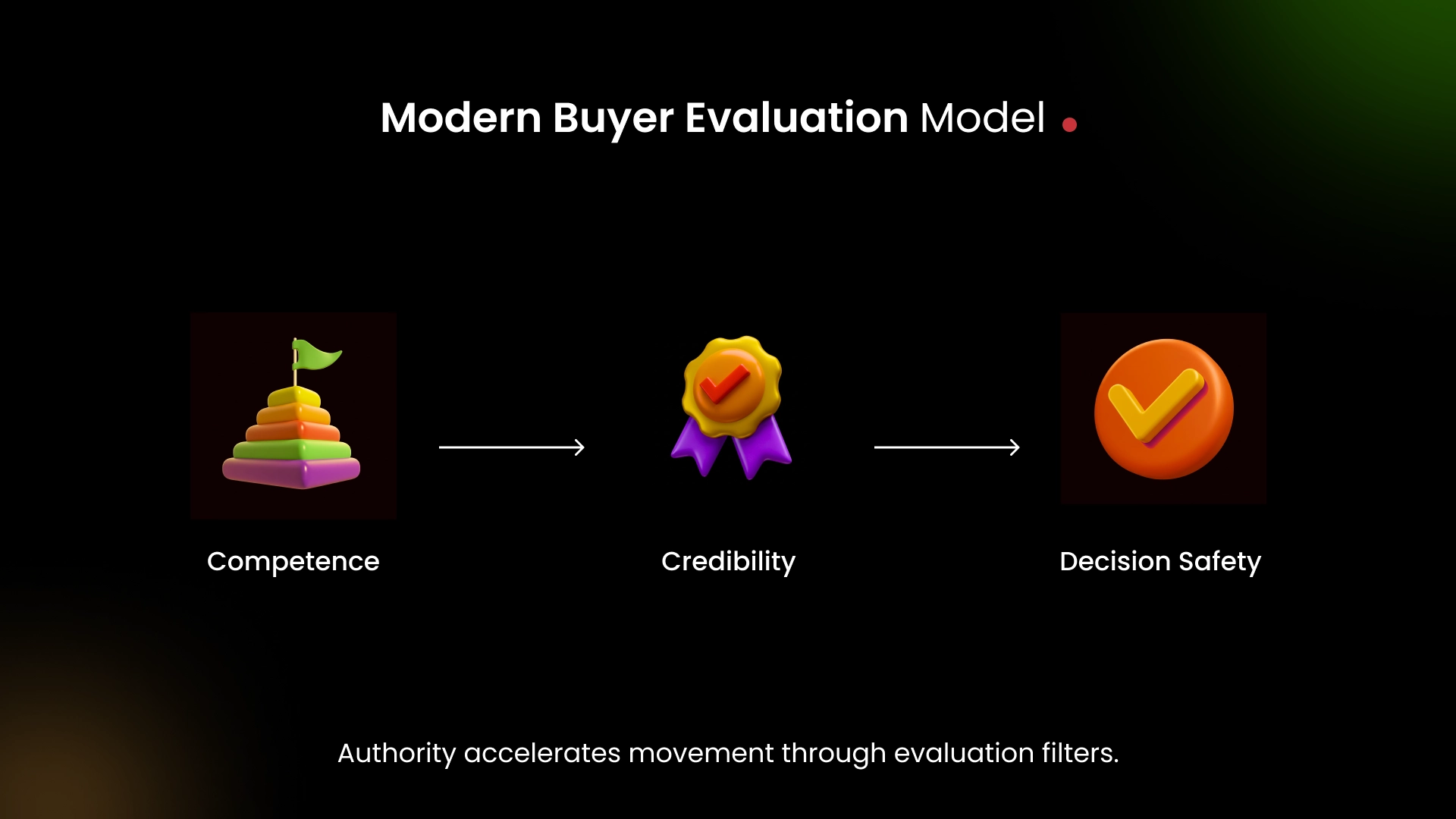
Modern B2B decision-making is no longer linear.
It moves through invisible filters before a foVisibility without authority may generate clicks.rm is filled.
“Do they truly understand my context?”
Buyers evaluate this through:
Generic content fails immediately here.
“Have they done this before?”
Buyers look for:
Proof reduces perceived risk.
“Will this reflect well on me?”
Especially in mature European markets, decisions are reputation-sensitive.
Buyers assess:
Authority shortens sales cycles.
Weak signals extend them.
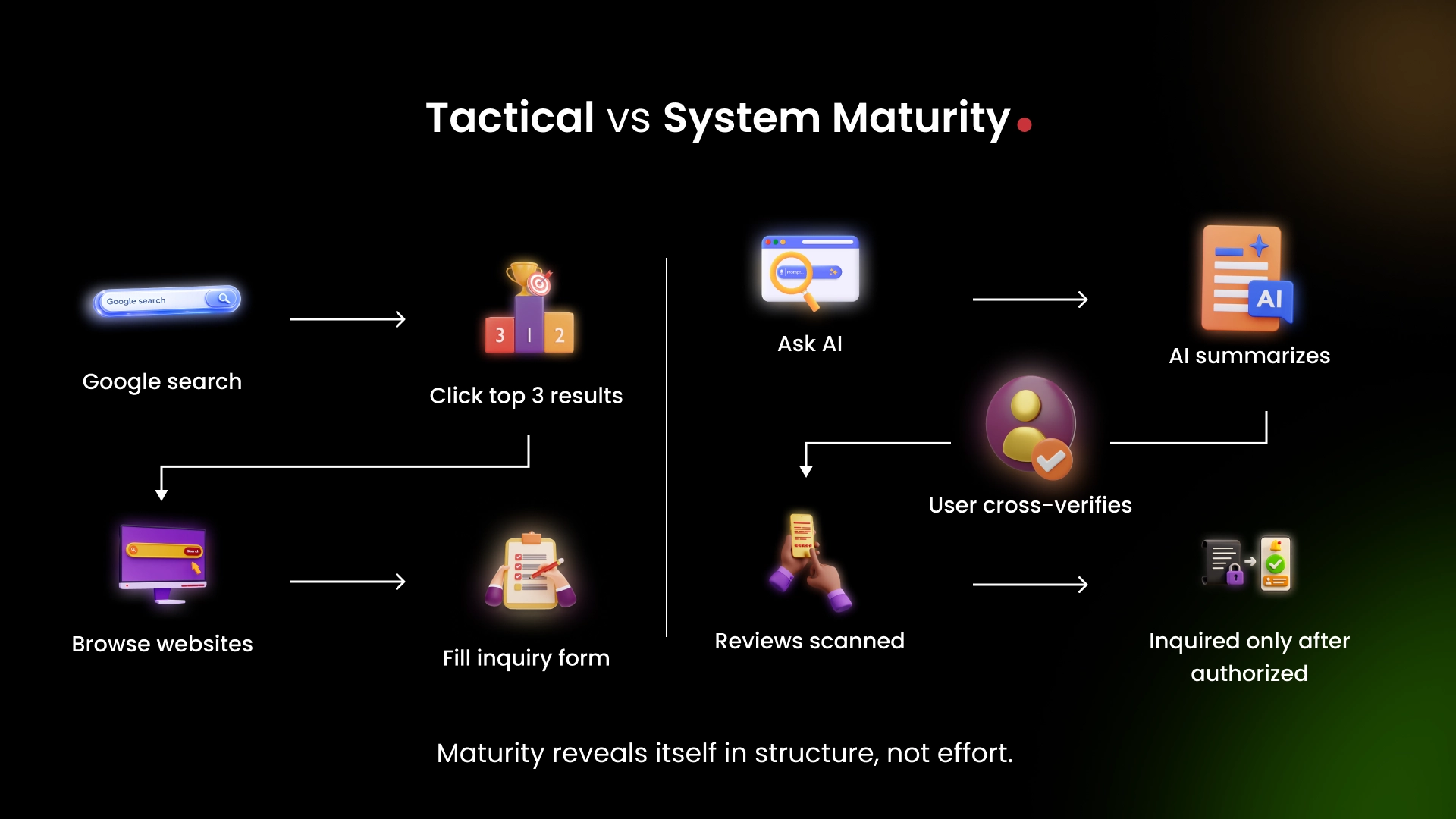
The digital journey is no longer confined to traditional search engines.
In 2026, buyers increasingly:
This shift has created a new layer of digital competition:
Answer Engine Optimization (AEO)
Generative Engine Optimization (GEO)
Unlike traditional SEO, AI-driven visibility favors:
If your content lacks context, nuance, and authority signals, AI systems are less likely to surface it in synthesized recommendations.
AI does not merely rank.
It selects.
And selection favors authority.
Traditional Path (2015–2020):
Modern Path (2026):
The journey has become compressed.
Evaluation happens before contact.
Authority signals determine inclusion.
Visibility without authority may generate clicks.
It rarely generates recommendations.
Search engines increasingly evaluate:
Ranking for isolated keywords is insufficient.
Authority is built when:
SEO has shifted from tactical ranking exercises to strategic authority architecture.
And authority architecture compounds.
When done correctly, visibility stabilizes.
When done superficially, rankings fluctuate.
You may be facing an authority gap if:
An authority gap is rarely fixed by more advertising.
It is fixed by strengthening structural credibility signals.

Visibility amplifies perception.
If perception lacks authority, you amplify weakness.
More traffic means:
Marketing spend increases.
Revenue efficiency decreases.
Instead of accelerating growth, visibility intensifies fragility.
Authority, by contrast, strengthens every downstream metric:
Authority does not create noise.
It creates leverage.
Authority cannot be improvised.
It must be designed.
It requires coordination across:
This is not campaign work.
It is structural work.
At Parashift Technologies, we partner with businesses that recognize this shift — especially those operating in mature, competitive markets where digital credibility is non-negotiable.
We help companies move from:
“Are we visible?”
to
“Are we authoritative?”
Because visibility invites evaluation.
Authority earns commitment.
In the digital economy of 2026, attention can be bought.
Authority must be built.
Being visible is no longer impressive.
Being trusted is.
And in an AI-driven discovery environment, authority is not just a marketing advantage.
It is a selection criterion.
If your growth strategy still prioritizes traffic over trust, the ceiling will appear sooner than expected.
But when authority becomes structural, visibility transforms from exposure into sustainable pipeline.
And that is where durable growth begins.